
SVL News
Refrigerants & PFAS in Commercial HVAC — A Past, Present, and Future Look at Refrigerant Evolution
Refrigerants are something commercial HVAC professionals live with every day—until a new acronym shows up and changes the conversation. In this SVL Coffee Break, SVL’s Marie Romell (B.S. Chemical Engineering, M.S. Applied Data Science) unpacked one of the fastest-rising topics in environmental policy: PFAS (per- and polyfluoroalkyl substances), and why it’s now intersecting with the refrigerant transition already underway across chillers, heat pumps, VRF, rooftop units, and split systems.
Marie’s goal wasn’t to prescribe “the right refrigerant.” Instead, she shared the PFAS education, regulatory trends, and refrigerant policy landscape engineers should understand when specifying equipment expected to operate for 15–25 years. The takeaway: we’re watching two major “policy trains” converge—PFAS regulation and HFC phase-downs—and that overlap may influence long-term decisions around low-GWP refrigerants, A2L adoption, leak detection, serviceability, and end-of-life disposal.
PFAS: Not One Chemical, but a Chemical Structure
PFAS isn’t a single substance—it’s a category defined by chemical structure. Marie walked through the “alkyl” backbone (a carbon chain), then explained how replacing hydrogens attached to those carbons with fluorine creates fluoroalkyl groups. In perfluoro structures, all hydrogens bonded to carbon atoms are replaced by fluorine (meaning the carbon chain is fully fluorinated), though hydrogens can still be present elsewhere in the molecule as part of other functional groups. In polyfluoro structures, only some of the carbon-bonded hydrogens are replaced by fluorine.
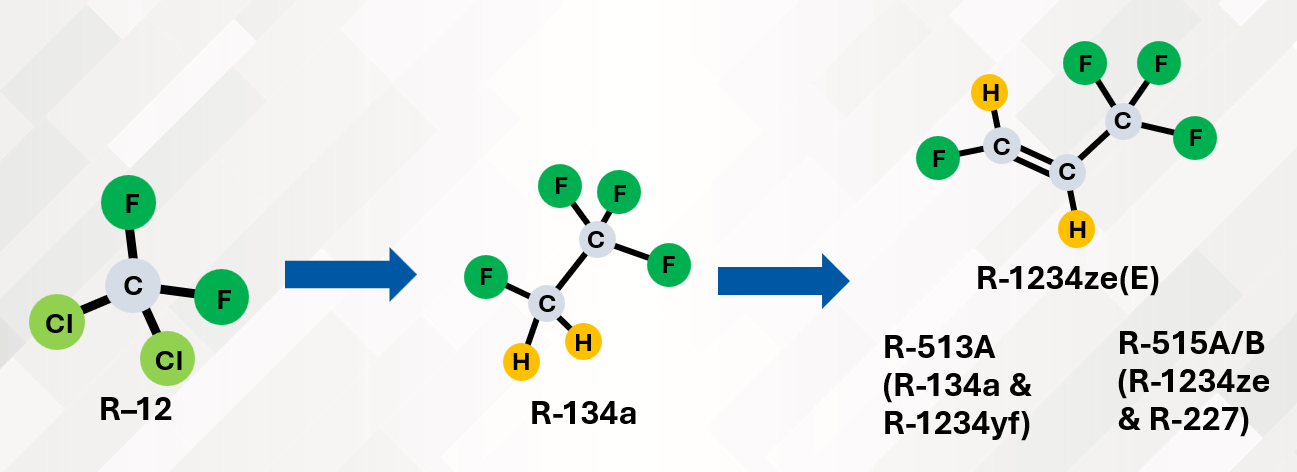
To bring it home for HVAC, she used a familiar example: R-134a (1,1,1,2-tetrafluoroethane). In other words: PFAS isn’t just a cookware, coating, or firefighting foam story—depending on definitions used by regulators, it can intersect with modern refrigerants and their breakdown products.
So why does structure matter? Because the carbon–fluorine bond is exceptionally strong. Fluorine’s electronegativity and “shielding” effect makes many PFAS compounds resistant to breakdown, contributing to their environmental persistence—hence the nickname “forever chemicals.”
Why PFAS Has Everyone’s Attention Right Now
The concern isn’t limited to one industry. It’s the broader reality that some chemicals persist in the environment long after use, migrate through shared resources like soil and drinking water, and may have long-term health and ecological impacts.
Marie shared examples of widespread detection in U.S. water systems and explained the key difference between long-chain vs. short-chain PFAS: long-chain compounds tend to persist and bioaccumulate more, while short-chain compounds can be more mobile. She also summarized current research trends showing associations between PFAS exposure and outcomes including developmental risks, immune impacts, and certain cancer risks—with the caveat that research continues to evolve.
Refrigerants Add a Twist: TFA, Atmospheric Breakdown, and Water Persistence
Unlike many PFAS sources (solids or liquids entering the environment through product pollution), refrigerants are often released as gases and move through the atmosphere. Under UV-driven reactions, certain fluorinated refrigerants can form TFA (trifluoroacetic acid)—a PFAS-like compound that can return to water systems through precipitation.
Marie emphasized an important nuance for HVAC professionals: TFA doesn’t bioaccumulate like long-chain PFAS, but it does persist in water, spreads easily, and isn’t effectively removed by conventional treatment. The concern isn’t “immediate danger,” but the long-term effect of a background concentration that can rise over time—a key watch item for future policy discussions.
Refrigerant Policy: Montreal Protocol, Kigali, AIM Act, and the 700 GWP Shift
The HVAC industry has navigated major refrigerant shifts before:
- Montreal Protocol (1987): phased down CFCs/HCFCs due to ozone depletion potential (ODP).
- Kigali Amendment (2016) + AIM Act (U.S., 2020): targets high-GWP HFCs with an 85% phase-down by 2036, pushing the market toward lower-GWP alternatives.
Now, we’re in the current transition: as new equipment aligns with a ~700 GWP limit, much of the market is shifting toward A2L refrigerants (mildly flammable, lower toxicity). Marie explained A2L in practical terms: ignition still requires fuel concentration, sufficient ignition energy, and oxygen—A2Ls make those conditions harder to achieve than highly flammable hydrocarbons, but they still require thoughtful design, code compliance, and best practices.
R-32 vs. Blends: Serviceability, Glide, and Long-Term Risk
One of the most practical commercial HVAC design conversations today is single-component refrigerants vs. blended refrigerants.
Marie highlighted R-32 as a notable option because it’s:
- Single-component (no temperature glide; improved predictability for heat transfer performance)
- Often lower charge with easier servicing (no fractionation concerns)
- Competitive when considering “effective GWP” and system realities
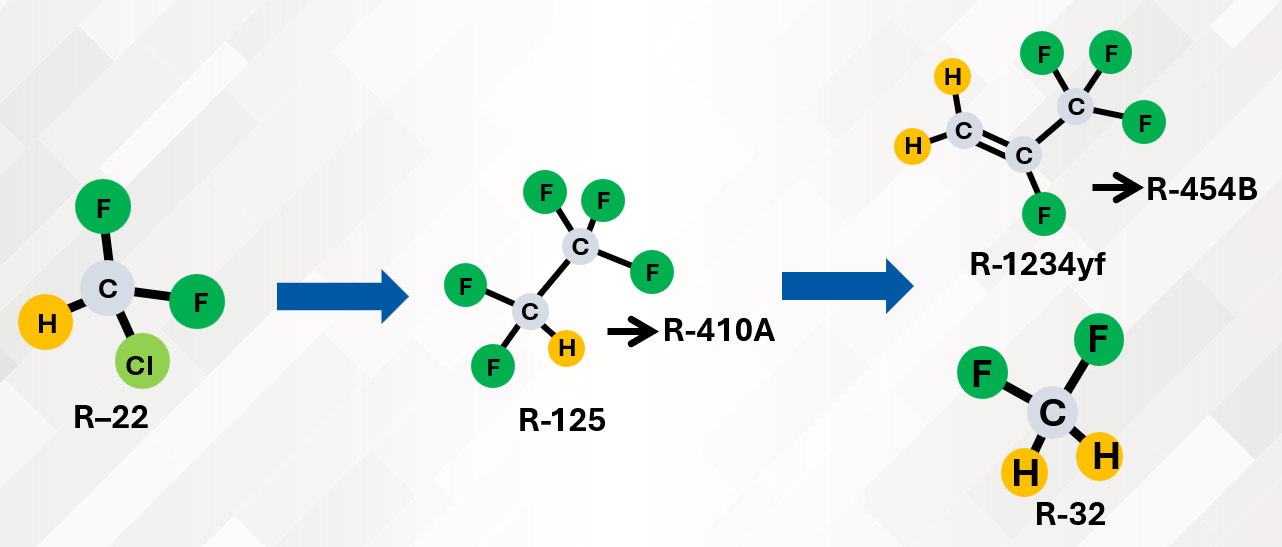
By contrast, blends like R-454B can balance constraints (pressure, flammability, performance), but introduce temperature glide and can complicate service, charging, and long-term availability planning.
That last point matters. As Andy noted, engineers are specifying systems that will be in service for decades. Marie’s advice: make the most ethical decision available, and document refrigerant choices, compliance rationale, and handling practices—because future requirements may expand around reporting, leak detection, disposal, and PFAS-related stewardship
What’s Next: Natural Refrigerants and Application-Specific Solutions
Marie closed by reframing the “future refrigerant” question: commercial HVAC is unlikely to land on a single solution. Instead, expect more application-specific refrigerant strategies, including wider use of natural refrigerants:
- Ammonia (R-717): high efficiency, zero GWP, but requires design for toxicity, ventilation, detection, and controlled spaces
- Propane (R-290): very efficient, but A3 flammability drives charge limits and modular system approaches
- CO₂ (R-744): nonflammable, low toxicity, GWP = 1, but high pressures and transcritical design complexity—already common in supermarket refrigeration and emerging in heat pump applications
The message wasn’t panic—it was preparation. If policy continues trending toward stricter GWP limits, expanded PFAS reporting, and broader scrutiny of fluorinated compounds, it’s better to understand the pathways now than be forced into rushed decisions later.
Need Help Sorting Through Refrigerants, PFAS, and Low-GWP Options?
If you’re designing or retrofitting commercial HVAC systems—especially long-lived infrastructure like chillers, central plants, and heat pump retrofits—SVL can help you evaluate refrigerant options based on performance, code implications, safety, serviceability, availability, and the policy trends shaping what comes next.
Low Pressure Centrifugal Chillers
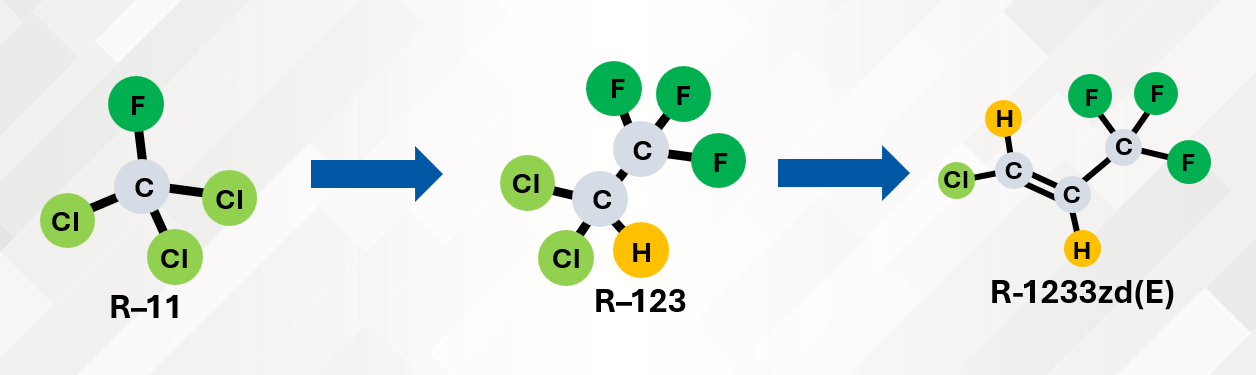
Medium Pressure (R-134a)
High Pressure (R-410A)
Don’t Miss the Next SVL Coffee Break
Be sure to catch the next SVL Coffee Break—our exclusive 50-minute webinar series featuring the HVAC industry’s most innovative voices. Whether your focus is on decarbonization, IAQ, or long-term energy planning, SVL is your trusted partner in delivering sustainable HVAC solutions.
To stay informed about upcoming sessions, sign up for our marketing emails, opt-in now.