
SVL News
Designing for Change: Adaptive Healthcare Spaces Through Modular & Prefabricated Solutions
Healthcare facilities are no longer designed for a single, fixed purpose. From pandemic response and patient surges to evolving infection control standards and care delivery models, today’s hospitals must be built for flexibility. In this SVL Coffee Break, Jeff Peterson welcomed Amy VanWagner, National Sales Director for AJ Manufacturing, to discuss how modular construction and prefabricated HVAC solutions are helping healthcare facilities design for long-term adaptability without sacrificing performance, compliance, or speed to occupancy.
The central theme of the discussion was clear: adaptability is no longer a luxury in healthcare design—it is a strategic necessity.
Why Adaptable Healthcare Design Matters
Healthcare environments demand high standards of performance and flexibility:
- Shifting patient volumes and acuity levels
- Outpatient growth and decentralized care
- Pandemic preparedness and surge capacity
- Stricter infection control requirements
- Evolving codes and standards
Traditional construction methods can struggle to keep pace with these pressures. Modular and prefabricated systems offer a faster, more predictable alternative—supporting future-ready healthcare facilities that can adjust as needs evolve.
What Modular & Prefabricated Solutions Mean for Healthcare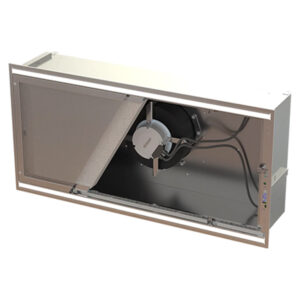
By shifting construction to a controlled manufacturing environment, project teams gain:
- Reduced onsite construction time
- Improved installation accuracy
- Enhanced quality control
- Better schedule predictability
- Reduced disruption in occupied facilities
For healthcare HVAC systems specifically, prefabrication supports tighter coordination between trades—minimizing field conflicts and accelerating commissioning.
Infection Control & Air Distribution: The HVAC Priority
One of the most critical elements of adaptive healthcare design is ventilation performance. Healthcare spaces must meet strict requirements for:
- Air changes per hour (ACH)
- Pressure relationships (positive and negative isolation)
- HEPA filtration
- Redundancy and reliability
- Code compliance (ASHRAE 170, FGI Guidelines)
Amy emphasized the importance of designing air distribution systems that can accommodate room-use changes. For example, converting a patient room into an airborne infection isolation room requires thoughtful planning around duct routing, dampers, and pressure control.
Modular plenum systems with structural supports allow engineers to build in this flexibility from the start.
Scalability & Phased Expansion
Healthcare campuses rarely stay static. Expansion phases, department relocations, and renovation projects are part of long-term growth strategies.
Designing for scalability reduces lifecycle costs and avoids major system overhauls when future demands arise.
Speed to Market Without Sacrificing Quality
Healthcare projects are often on aggressive schedules. Prefabricated mechanical systems help compress timelines while maintaining precision.
Factory-built assemblies:
- Reduce field labor
- Improve installation consistency
- Enhance patient safety
- Simplify inspections
- Improve operational efficiency
For facilities undergoing renovations, modular solutions minimize downtime and disruption to active patient care areas—an increasingly important consideration in occupied hospitals.
Designing for Long-Term Performance
The discussion reinforced that adaptive healthcare design is not about short-term flexibility—it’s about strategic resilience.
Engineers must evaluate:
- Long-term energy performance
- Maintainability and service access
- Code evolution
- Surge capacity planning
- Integration with future technologies
By incorporating modular and prefabricated strategies early in design, project teams can reduce risk and build healthcare environments capable of evolving alongside patient care demands.
Preparation Over Reaction
Healthcare systems cannot afford reactive design. The future will continue to bring regulatory changes, technology advancements, and shifting patient expectations.
Designing for adaptability today—through modular construction, prefabricated HVAC systems, scalable infrastructure, and flexible air distribution—positions facilities to respond quickly without compromising safety or compliance.
Need Support for Your Healthcare Project?
If you’re designing or retrofitting healthcare facilities, SVL can help evaluate modular HVAC solutions, prefabricated assemblies, infection control strategies, and scalable infrastructure planning tailored to your application.
Don’t Miss the Next SVL Coffee Break
Be sure to catch the next SVL Coffee Break—our exclusive 50-minute webinar series featuring the HVAC industry’s most innovative voices. Whether your focus is on decarbonization, IAQ, or long-term energy planning, SVL is your trusted partner in delivering sustainable HVAC solutions.
To stay informed about upcoming sessions, sign up for our marketing emails, opt-in now.